Introduction
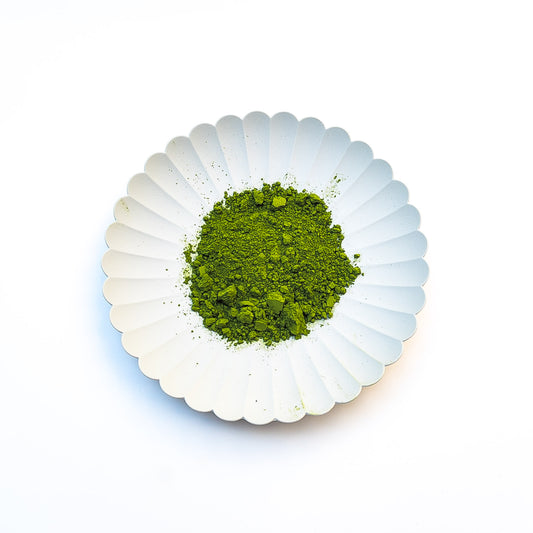
Matcha, with its vibrant green color and unique umami, is not just a drink.
It is also a cultural symbol of Japan, closely linked to Zen philosophy and the art of tea.
In this article, let’s discover the history of matcha, its role in the tea ceremony, and why it deserves to be enjoyed in its purest form.
The origins of matcha – from China to Japan

Matcha finds its roots in the 12th century, in China during the Song dynasty.
This practice of grinding tea leaves into a powder to whisk into water was introduced to Japan by the Buddhist monk Eisai.
Over time, this way of preparing tea took on a spiritual dimension in Zen temples, where matcha helped monks stay awake and focused during meditation.
Thus, tea became intimately linked to Japanese culture and thought.
The role of matcha in the tea ceremony

In the 16th century, Sen no Rikyū (千利休) profoundly marked the history of tea by developing the aesthetic of wabi-cha (わび茶).
Rather than favoring opulence, he highlighted simplicity, humility, and spiritual depth.
The tea ceremony, or chanoyu (茶の湯), revolves around matcha and embodies four fundamental principles:
和敬清寂
Wa - 和 (harmony): the balance between people, nature, and the present moment
Kei - 敬 (respect): the consideration and attention given to others
Sei - 清 (purity): the clarity of heart and mind
Jaku - 寂 (tranquility): inner peace, attained through the tea ritual
Enjoying a bowl of matcha in this setting goes beyond the act of drinking: it is an aesthetic, philosophical, and deeply human experience.
Matcha in the modern world

Today, matcha has moved beyond the ceremony to become a global beverage.
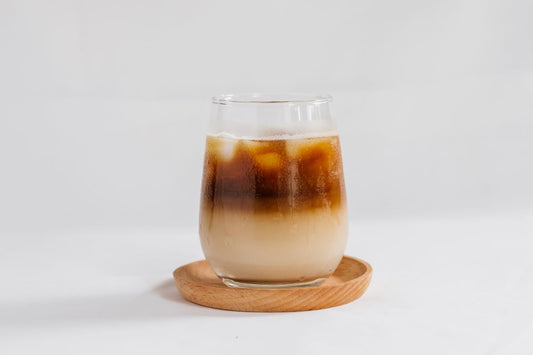
We find it in cafes as matcha lattes, in pastries, and even in smoothies.
But beyond these trends, the essence of matcha lies in pure tasting: a silent moment, where one fully savors the depth of its taste and the beauty of its froth.
A unique experience: Organic Ceremonial Matcha
At TAMAKI TEA, we believe the best way to feel the soul of matcha is to enjoy it as it was intended in the tea ceremony.
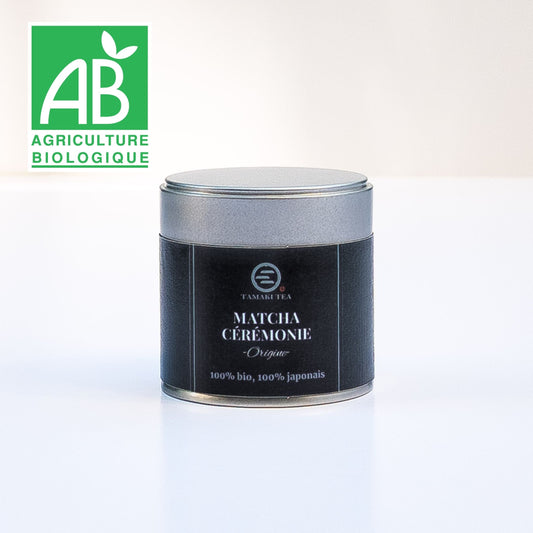
Our ORGANIC CEREMONIAL MATCHA —Origin— is:

- A superior grade, traditionally used in chanoyu
- Carefully packaged in Japan in an airtight tin under a nitrogen atmosphere
- Air-freighted to preserve all its freshness until opening
The result: a cup with deep umami, a silky texture, and a refined fragrance, inviting you to live in the present moment.
Conclusion
For over 800 years, matcha has embodied a philosophy of life where simplicity, respect, and harmony intertwine.
While it is now featured in lattes and desserts, it retains all its nobility in its original form: a bowl whisked with hot water, enjoyed in mindfulness.
👉 To discover this authentic experience, taste our [ORGANIC CEREMONIAL MATCHA —Origin—].
More than a drink, it is a gateway to the depth and serenity of Japanese culture.