The scent of Proust’s madeleine and Japanese memory
In France, everyone knows the episode of Proust’s madeleine:
the moment when the scent of a small cake dipped in tea brings childhood memories back to life in an instant.
What psychologists today call the "Proustian phenomenon."
In Japan, too, we have this intimate relationship between scent and memory.
A very Japanese phrase goes:
"It smells like my grandmother's house."
This expression evokes damp wood, tatami, incense, and tea.
Different scents, yet they trigger the same emotion for many Japanese people: nostalgia and inner peace.
Perfume is an invisible art, a language of time and memory.
And in Japan, this art has a name: Kōdō, the way of perfume.
What is Kōdō — The art of "listening" to perfume
The Kōdō (香道) is the Japanese art of perfume.
Literally, it means "the way of perfume."
In this practice, one does not "smell" perfume: one listens to it (monkō 聞香).
The goal is not to judge the scent, but to let it wash over you, to recenter yourself, and to regain serenity.
Kōdō was born in the Muromachi period (15th century) within aristocratic and samurai circles.
It was part of the refined arts, alongside Sadō (the way of tea) and Kadō (the art of flowers).
Today, it is being rediscovered as a meditative practice, a moment of calm in a world saturated with noise and speed.
The four essential scents of Kōdō
All Kōdō scents are derived from nature.
They are neither artificially manufactured nor blended: each wood, each resin possesses its own soul and story.
🌳 Jinkō (沈香) — Agarwood, deep and mystical

The Jinkō (or agarwood) comes from trees of the Aquilaria genus,
native to Southeast Asia.
As the wood ages and its resin slowly absorbs the essence of the earth, it becomes a rare and precious scent.
Its scent is warm, sweet, and slightly smoky.
It is said to soothe the spirit and invite silence.
Jinkō is considered the king of fragrant woods.
🌿 Byakudan (白檀) — Sandalwood, pure and soothing

The Byakudan, or white sandalwood, is native to India and Indonesia.
Its sweet, creamy scent is often used in Buddhist meditation.
In Kōdō, it symbolizes the purification of the heart.
Its clear and balanced scent creates an atmosphere of inner calm.
🌾 Chōji (丁子) — Clove, warm and spicy

The Chōji comes from the dried flower buds of the clove tree, native to the Molucca Islands.
Its scent is both sweet and pungent, warming the body and the spirit.
In Kōdō, it is often combined with other woods to create a harmonious aromatic balance.
Chōji represents human warmth and vital energy.
🍂 Keihi (桂皮) — Cinnamon, a scent of vitality

The Keihi, or cinnamon, comes from the bark of the cinnamon tree.
Its sweet and woody scent brings to mind the comfort of home and the warmth of the body.
It symbolizes vitality and presence in the world.
Used sparingly, it brings roundness and energy to Kōdō olfactory compositions.
How to practice Kōdō — An olfactory meditation

Kōdō is neither a competition nor a simple tasting of scents.
It is an olfactory meditation.
When heating a small fragment of fragrant wood on charcoal, one does not seek the smoke, but the breath of the perfume.
During these few minutes of silence, time seems to stand still.
It is an art of slowness, a way of listening to the present through perfume.
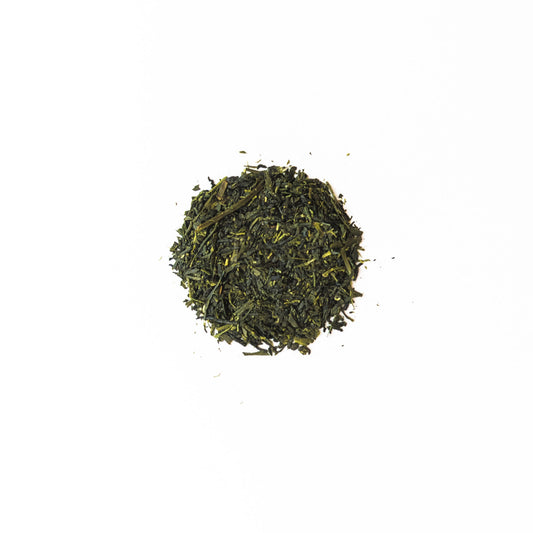
Today, there are also more accessible versions, such as tea burners (chakaoro): green tea or hōjicha leaves are placed in them,
and the heat releases a sweet and comforting aroma throughout the room.
What perfume conveys — Memories, silence, serenity
Perfume traverses time without leaving a visible trace,
but its imprint remains in the heart.
The scents of Jinkō, Byakudan, Chōji, and Keihi
awaken deep emotions and offer a space of inner calm.
Kōdō invites us to take a break,
to breathe slowly,
and to remember that beauty is often found
in that which gently fades away.
Next article: Japanese words inspired by perfume

In the next chapter, we will discover Japanese words born from the relationship between perfume and the spirit:
幽香 (yūkō) – the subtle scent,
馥郁 (fukuiku) – the noble and enveloping fragrance,
香気円満 (kōki enman) – inner peace that emanates like a perfume.
Words that show how, in Japan,
perfume is more than a scent: it is a state of mind.
🌸 Discover the rest of the Japanese Wisdom of Perfume series:
👉 Perfume and words — Japanese wisdom of the invisible language