Introduction
Japanese green tea is increasingly captivating lovers of authentic flavors in Europe.
Among its most iconic varieties, three names often appear: matcha, sencha, and hōjicha.
Matcha and Tencha (碾茶) – The heart of Japanese tea

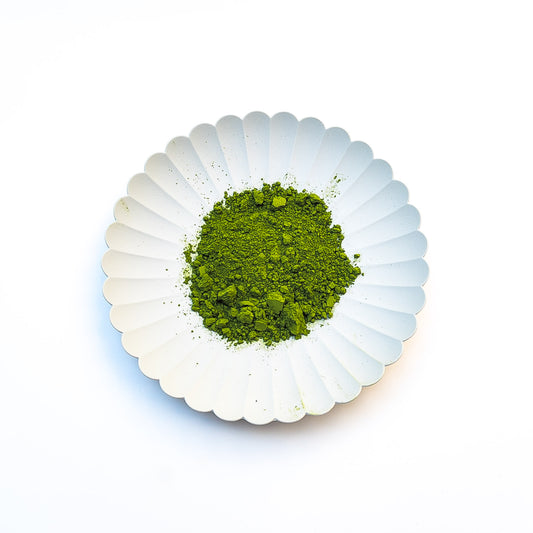
Matcha is undoubtedly the most famous Japanese tea. It is obtained by grinding the leaves of tencha (碾茶), a variety of shade-grown green tea, very finely in a stone mortar.
-
What is tencha (碾茶)?
Tencha is a unique Japanese green tea: before harvest, the tea bushes are covered for at least 20 days to reduce sunlight. The harvested leaves are then steamed, dried without being rolled, and then dried in a special oven (tencharo). This is the raw material that, once ground, becomes matcha. - Taste: deep umami, refined sweetness, very little bitterness
- Preparation: whisk the matcha with a chasen and about 80 ml of hot water (70–80°C) using quick M or Z motions for 30 seconds, then gently smooth out the foam
- Usage: a ritual drink during the tea ceremony, accompanied by wagashi (Japanese sweets)
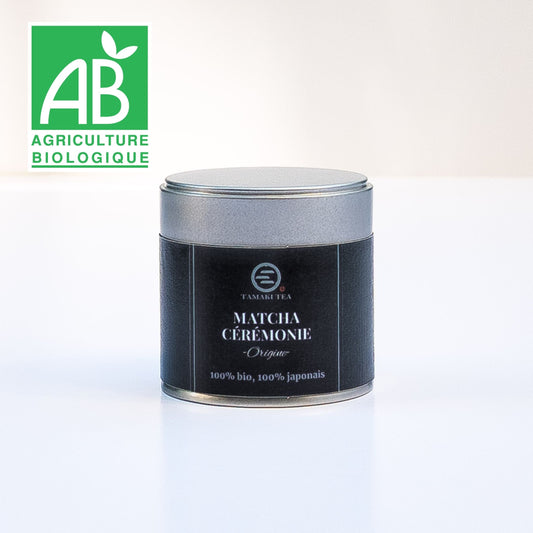
👉 To experience this in all its authenticity, discover our Organic Ceremonial Matcha, hand-harvested in Kirishima (Kagoshima), packaged in a tin in Japan, and nitrogen-flushed to preserve its full freshness until opening.

CEREMONIAL MATCHA —Origin— ORGANIC
Sencha – The everyday tea in Japan

Sencha is the most consumed green tea in Japan. Unlike tencha, it is grown in full sunlight. The leaves are harvested, quickly steamed and then rolled before being dried.
- Taste: a balance between umami, slight astringency, and vegetal freshness
- Preparation: brew at 70–80°C for about 1 minute
- Moments: this is the tea the Japanese drink most often during meals or on a daily basis
👉 In our selection, you will find the Fukamushi Sencha, with its rich and deep taste, and the Kabusecha, with its sweet and fruity profile.


Hōjicha – The roasted sweetness
Hōjicha is obtained by roasting sencha over high heat.
(Bancha is a Japanese tea made from more mature leaves, with a light taste and low astringency.)
- Taste: toasted and warm aroma, nutty notes, no bitterness
- Preparation: easily prepared with very hot water, delicious both hot and iced
- Usage: in Japan, it is frequently served during meals or in the evening for a relaxing moment

Conclusion
Each Japanese tea has its own character:
- Matcha: refined and deep, ideal with wagashi in the tea ceremony
- Sencha: daily tea, perfect to accompany meals
- Hōjicha: sweet and roasted, suitable for any time of the day
✨ To savor the full depth of Japanese culture, treat yourself to an exceptional moment with our [Organic Ceremonial Matcha].
And to discover how to pair Japanese tea with sweets, also read: [Pairings between matcha and Japanese and French sweets].