Introduction
It may be surprising, but matcha, green tea, and black tea all come from the same tree: Camellia sinensis.
A single plant, yet completely different tastes, colors, and rituals.
So, how can the same tea become a vibrant green powder, a golden infusion, or an amber cup?
Everything depends on the way it is processed.
The degree of oxidation, the drying method, the way it is grown: each step changes the tea's character.
In France, black tea remains an everyday drink.
But in Japan, the same leaves take on a different life – that of matcha and sencha, two symbols of a different way of life.
Let’s discover together what distinguishes these three worlds.
1. A question of production
-
Matcha
Matcha comes from leaves shaded from the sun for about twenty days before harvest.
This technique, called shading, develops umami.
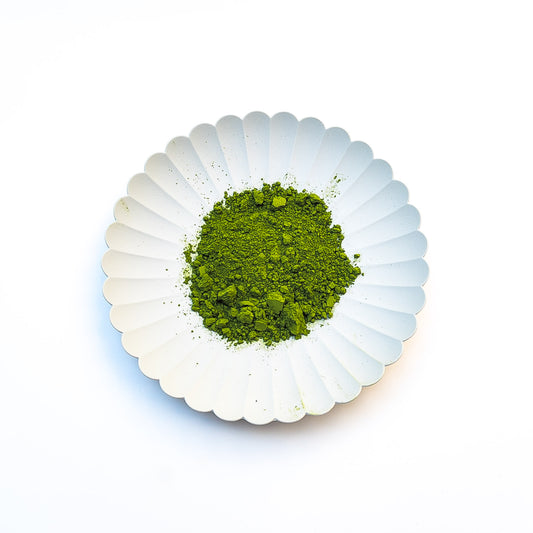
The leaves are then dried and finely ground to obtain a pure powder.
You are therefore drinking the whole leaf, not just its infusion.

-
Black tea
The leaves are fully oxidized, which gives them that copper color and a rounded, sometimes malty taste.
It is the classic afternoon tea in Europe.
-
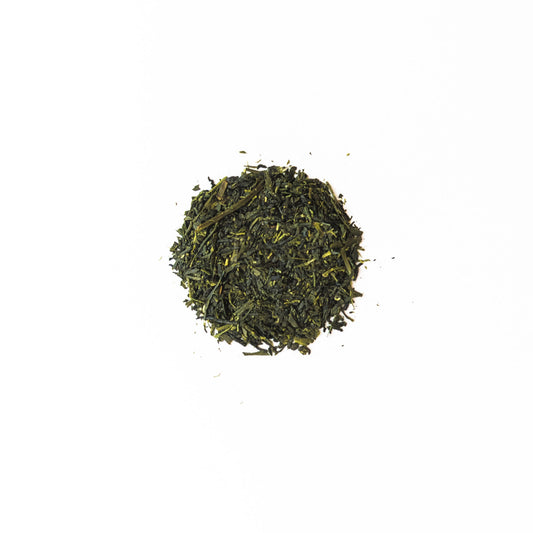
Classic green tea (sencha)
In Japan, the leaves are quickly steamed to stop oxidation.
This preserves the green color and the fresh, vegetal notes.

2. Caffeine and effects

-
Matcha
About 60–70 mg of caffeine per serving (2 g).
Thanks to L-theanine, its effect is smoother and more consistent – focus without the jitters. -
Black tea
Around 40–50 mg per cup.
It warms and stimulates, perfect for the morning or after lunch. -
Green tea (sencha)
Lighter, about 30 mg depending on water temperature.
Ideal for accompanying a meal or a late-day break.
3. Aromas and taste

-
Matcha
Dense, creamy, slightly bitter but with a lovely roundness.
Excellent in a latte or with a sweet dessert. -
Black tea
Fragrant, tannic, with notes that vary by origin (Darjeeling, Assam, Ceylon...).
Can be drunk plain or with milk. -
Green tea (sencha)
Light, vegetal, often very fresh.
Evokes spring, simple and thirst-quenching.
4. When to drink them?

- In the morning, for an energy-filled start → a bowl of matcha
- In the afternoon, to relax → a cup of black tea
- In the evening or during a meal → a light sencha or a roasted hōjicha
Each tea has its place in the day.
Matcha helps you focus, black tea accompanies quiet moments, sencha balances your daily routine.
Our TAMAKI TEA recommendations
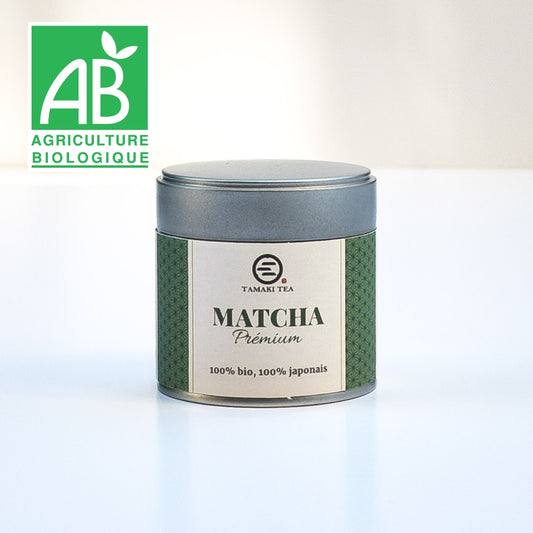
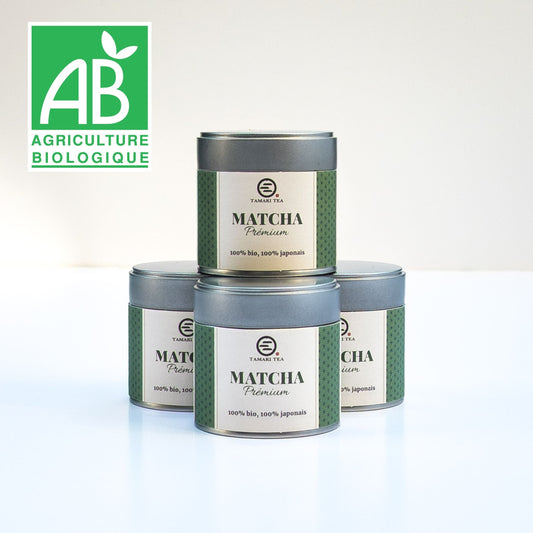
- Matcha Premium: a matcha with an intense taste, perfect for a latte or a moment of concentration.
- Sencha Fukamushi: a deep and rounded green tea, ideal with a meal.
- Hōjicha Powder: roasted and mild, for the evening or after a meal.
Conclusion
Same plant, three worlds.
Matcha, black tea, and green tea show how much a simple tea can tell different stories.
Choosing one or the other isn't just a matter of taste – it's a matter of the moment.
In the morning, let yourself be awakened by matcha.
In the afternoon, relax with a good black tea.
And in the evening, soothe yourself with a smooth sencha.