Introduction
The word "matcha" is now known all over the world.
But in reality, it is often confused with green tea powder. These two products, however, have neither the same cultivation, nor the same manufacturing method, nor the same taste.
In this article, we clearly explain the difference between matcha and green tea powder to help you recognize authentic Japanese matcha.
What is matcha?
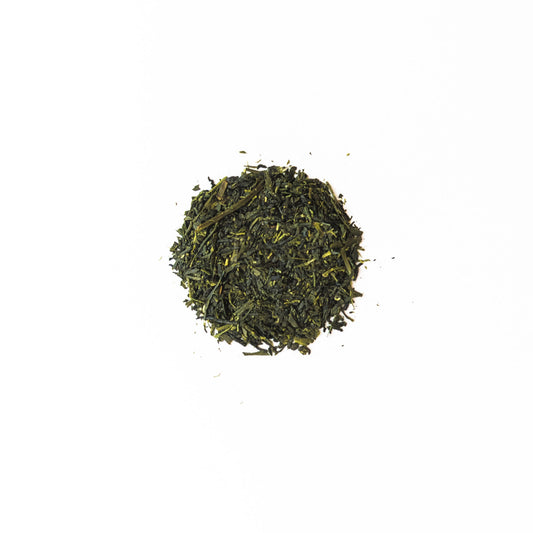
Matcha is a Japanese green tea obtained by grinding tencha (碾茶) leaves very finely in a stone mill.
- Cultivation: the tea bushes are covered for at least 20 days before harvest (shaded cultivation), which increases the L-theanine content and reduces bitterness.
- Manufacturing: the leaves are steamed, dried without being rolled, and then stone-ground.
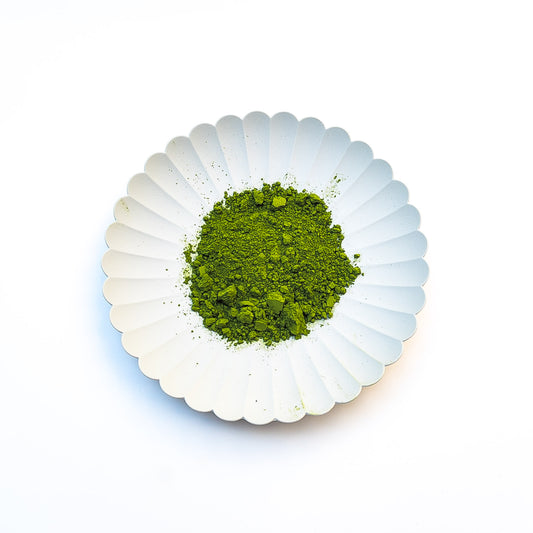
- Characteristics: bright green color, intense umami taste and refined sweetness, creamy foam when whisked.
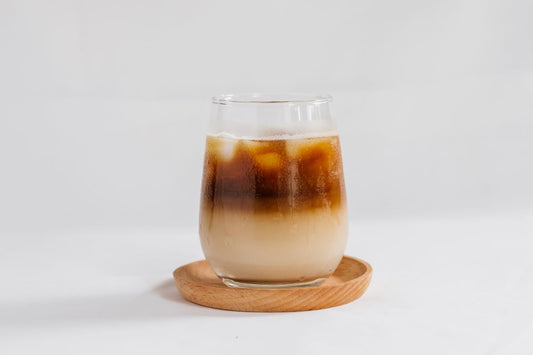
- Uses: tasting during the tea ceremony, but also matcha latte or pastries.

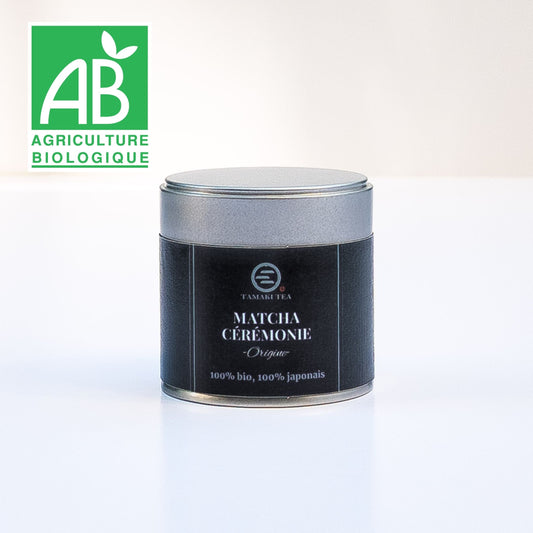
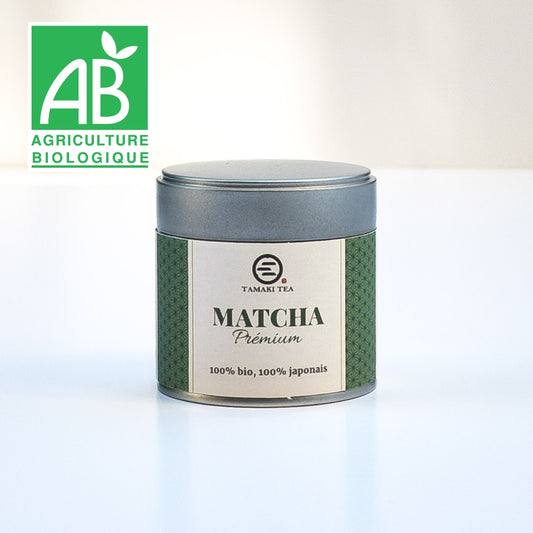
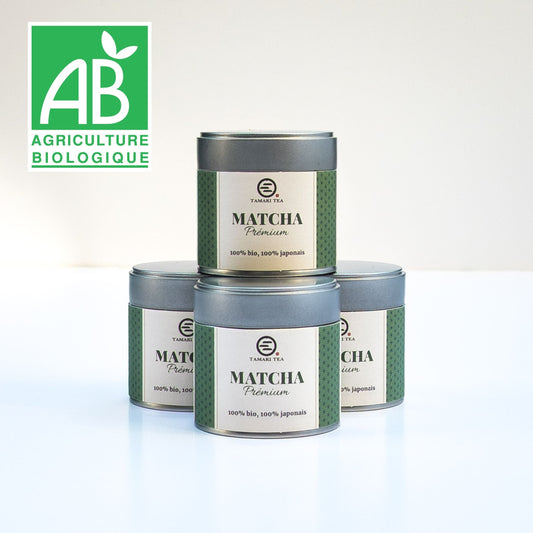
👉 At TAMAKI TEA, our Organic Ceremonial Matcha and Premium Matcha are packaged in tins in Japan, nitrogen-flushed, and air-shipped, ensuring optimal freshness until opened.
What is green tea powder?
Conversely, what is often found in Western markets under the name green tea powder is not matcha.

- Cultivation: the leaves are grown in full sun, without shading.
- Manufacturing: the tea leaves are simply dried and then mechanically ground.
- Characteristics: dull color (brownish green), marked bitter and astringent taste.
- Uses: inexpensive, it is often used in the food industry as a secondary ingredient (desserts, cookies, sweetened drinks).
👉 In summary, green tea powder is nothing more than ground green tea, not matcha.
Comparison table: Matcha vs. Green Tea Powder
| Criterion | Matcha (authentic) | Green Tea Powder |
|---|---|---|
| Raw material | Tencha (shaded cultivation) | Conventional green tea (full-sun cultivation) |
| Method | Stone grinding | Simple mechanical grinding |
| Color | Bright, vivid green | Dull to brownish green |
| Taste | Rich umami, sweetness, very little bitterness | Bitter, astringent |
| Use | Tea ceremony, lattes, pastries | Low-cost ingredient for food industry |
Why is this difference important?
- Taste: matcha is rounded and umami, whereas green tea powder is often too bitter.
- Nutritional level: matcha, thanks to shaded cultivation, contains more L-theanine, catechins, and chlorophyll.
- Value: matcha requires more care and labor, which justifies its higher price and incomparable quality.
How to recognize real matcha?
- Color: bright and luminous green.
- Aroma: sweet, fresh, slightly sugary.
- Texture: whisked with a chasen, it produces a fine, creamy foam.
- Origin: the packaging clearly mentions "matcha" and "Japan" as the country of production.
👉 At TAMAKI TEA, all our matchas are derived from Japanese tencha and produced according to traditional methods.
For daily use → MATCHA HARMONY

For a more refined touch → ORGANIC PREMIUM MATCHA

For the tea ceremony → CEREMONIAL MATCHA —Organic—

Conclusion
The word "matcha" is sometimes used incorrectly to refer to simple green tea powder.
In reality:
- Matcha = tencha powder, stone-ground, rich in umami
- Green tea powder = ordinary tea leaves simply reduced to powder
✨ To discover the very essence of Japanese tea, choose authentic matcha.
Browse our [Guide: How to choose your matcha] and find the one that suits your tastes.
Did you know that many products sold under the name "matcha" are actually not real matcha? Discover how to recognize them in this article → [Beware of fake matcha! How to recognize authentic Japanese matcha?]